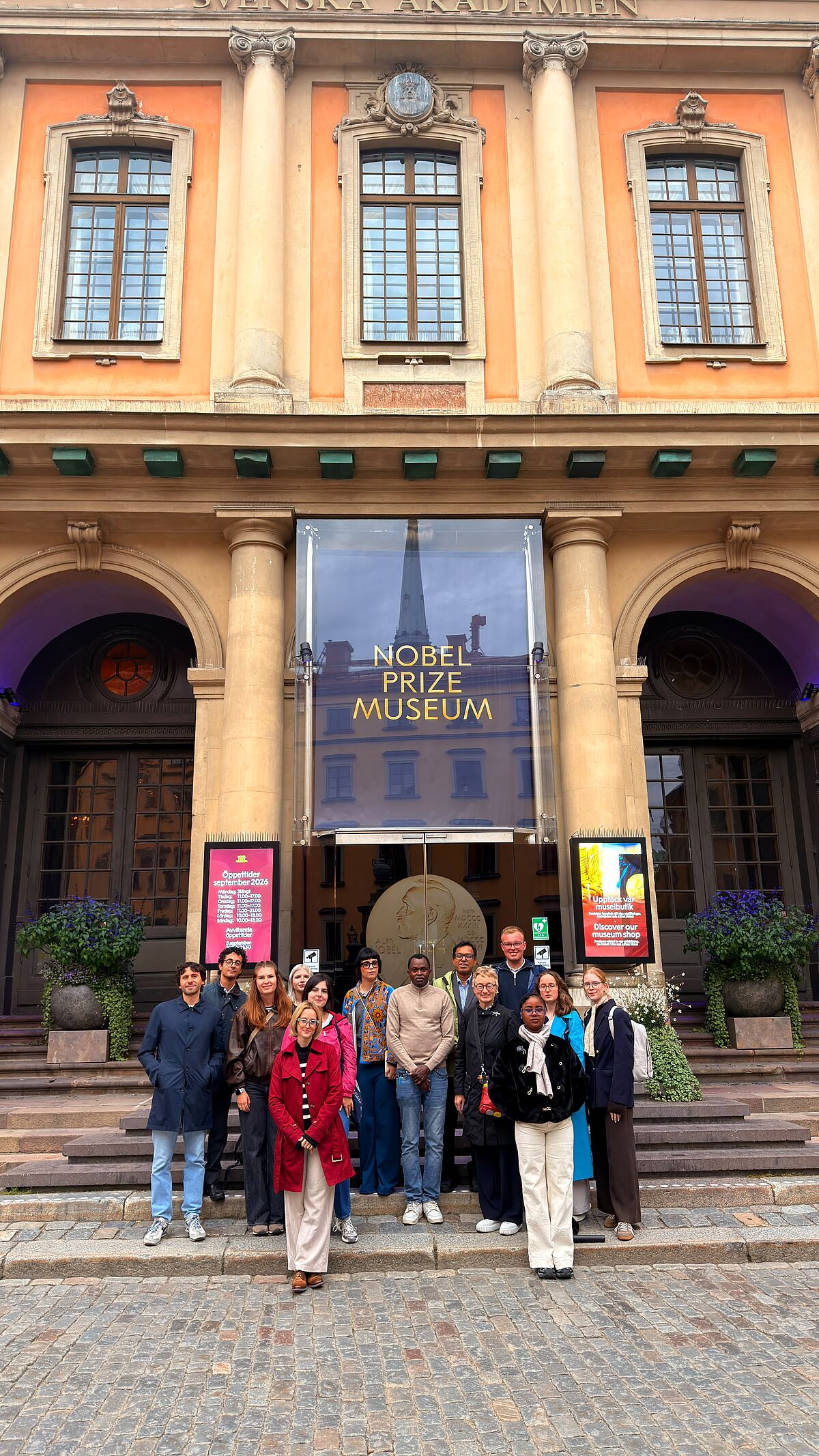
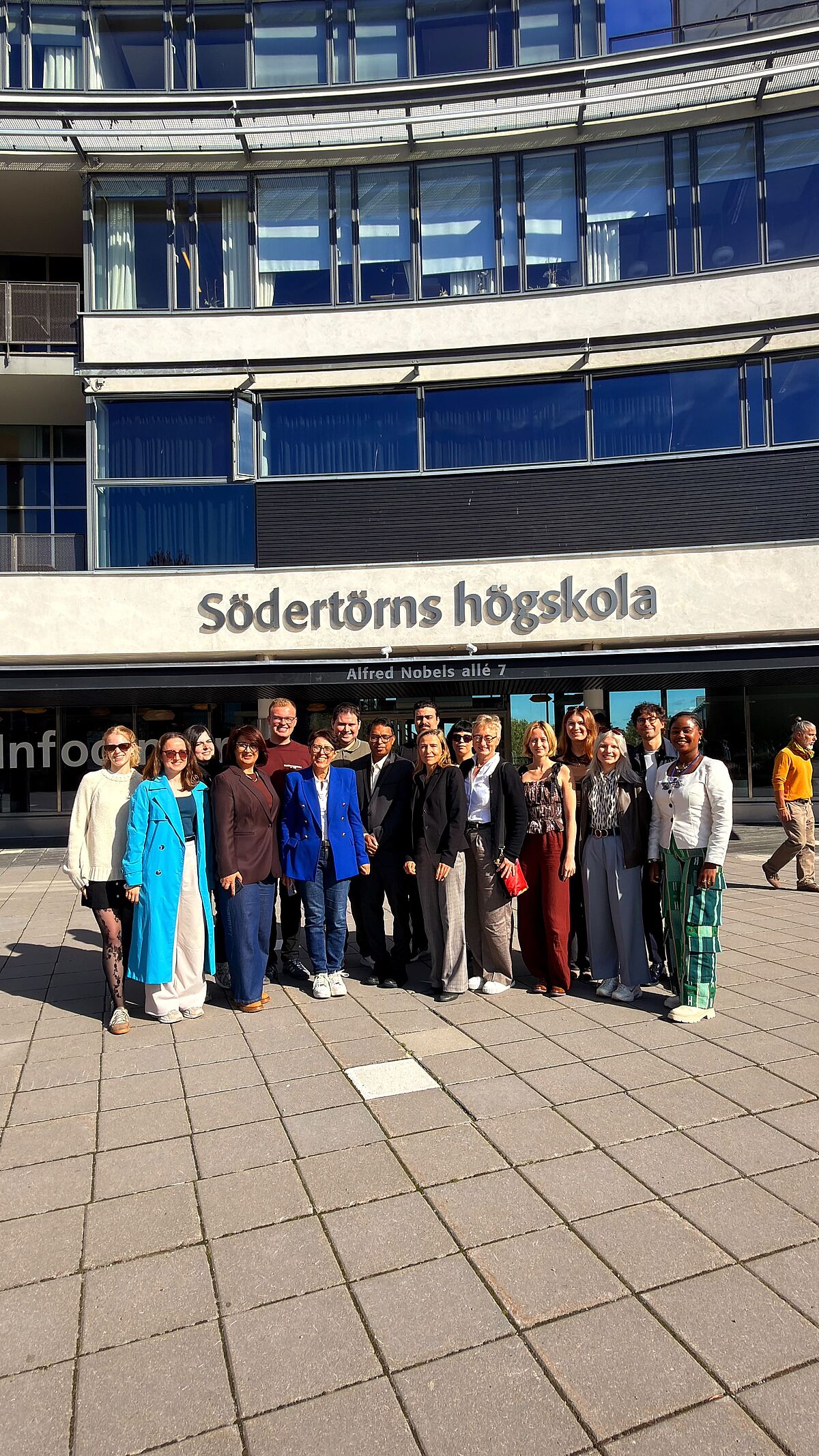
The IfEUS, headed by Prof. Dr Sabine Schlacke, played a key role in shaping the content of the
programme. In Stockholm, alongside the University of Greifswald, the University of Camerino (Italy), the University of Trnava (Slovakia) and the University of Valahia Târgoviște (Romania) were also involved. The IfEUS, represented by the Institute’s Director, Prof. Dr Sabine Schlacke, and research
assistant Marie Bärenwaldt, supported the virtual introductory phase of the programme even before the start of the study visit abroad. As part of this, various lectures were delivered on EU climate law in in connection with the United Nations’ Sustainable Development Goals (SDGs), as well as on the
law and history of German cultural heritage. On site, Prof. Dr Sabine Schlacke provided an overview of German climate legislation and placed it within both its
European and international legal contexts. A lively exchange took place between the professors and the students from the various universities.
Together, they discussed the differences and similarities in the climate legislation of the five countries represented. In addition to the academic programme, the stay in Stockholm also offered a wide range of opportunities for personal exchange and international networking. During a joint city tour and a dinner hosted by the host university, Södertörn, the students and lecturers from the participating universities were able to engage in conversation outside the seminar room. This led to the formation of personal contacts extending beyond their own universities, which provide a solid foundation for further collaboration on the project as well as for future partnerships. The students’ task is now to produce a project report in small international groups, drawing on the knowledge they have acquired. To this end, specific case studies on cultural heritage sites in Europe threatened by climate change will be examined. Following their research, each group will then develop a climate adaptation and resilience strategy and identify interdisciplinary solutions at
the interface between law, environmental protection and cultural heritage management. For the evaluation, the professors and students will meet again in the
digital space to discuss their proposed solutions together. The programme has thus not only provided a comparative legal perspective on the climate legislation of the participating countries, but has also deepened European and interdisciplinary cooperation within the KreativEU Alliance. For the IfEUS, the BIP also provided an opportunity to contribute its expertise in climate and environmental law to a European context and, together with the partner universities, to develop new perspectives on the interrelationships between climate protection, cultural heritage and sustainability. The contacts established form a solid foundation for further joint teaching and research activities. The programme was carried out as part of the European university alliance ‘KreativEU’. KreativEU is a consortium of eleven European universities that have set themselves the goal of placing Europe’s cultural heritage at the heart of teaching, research and knowledge transfer, and, building on this, developing innovative solutions to current and future societal and environmental
challenges.
Blended Intensive Programme ‘Climate Law, Cultural Heritage and Sustainability’ at Södertörn University