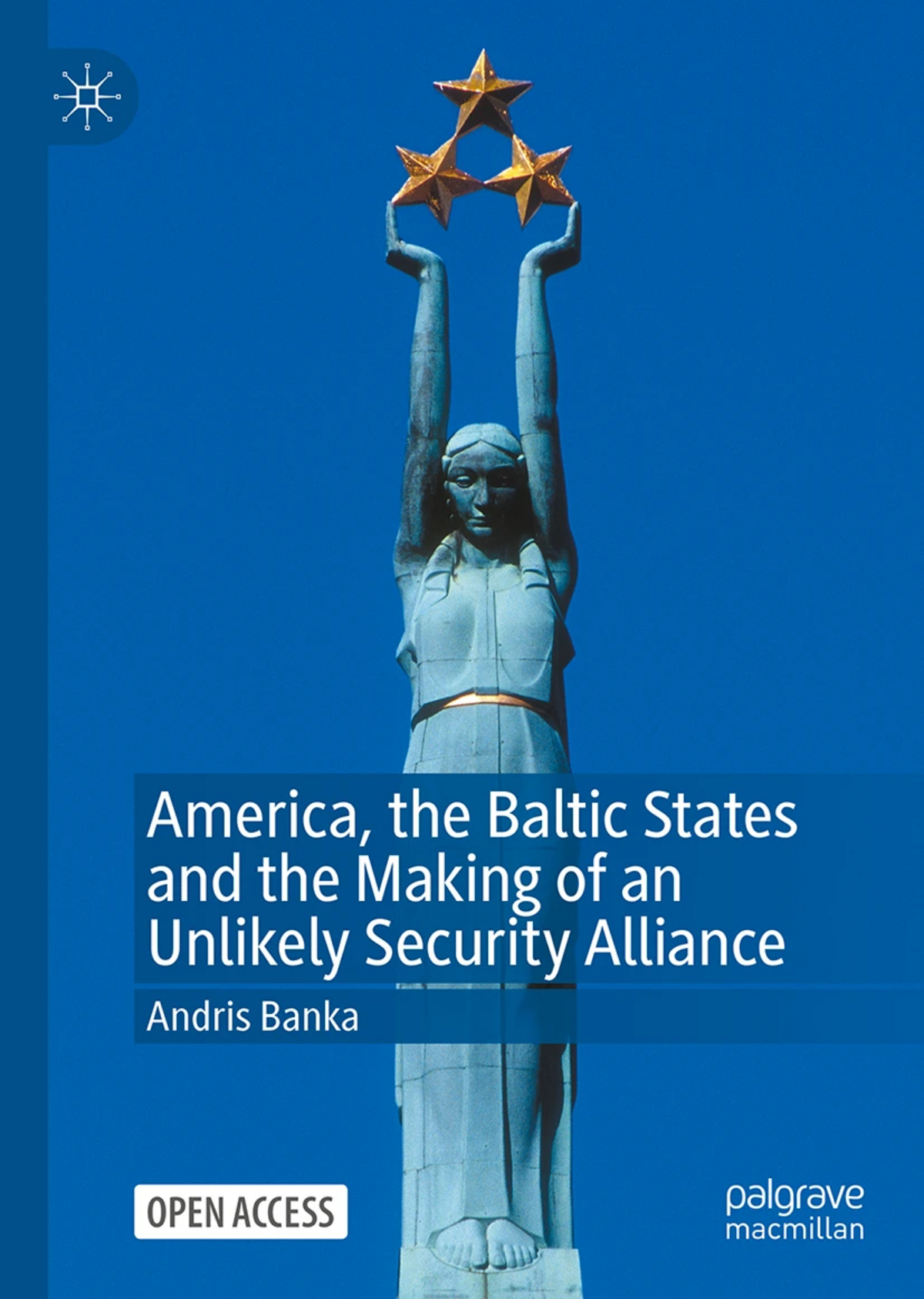
The book traces the development of the security alliance between the United States and the Baltic States of Estonia, Latvia and Lithuania since the early 90s – a period of profound upheaval after the end of the Soviet Union. It focuses on the development from a phase of political insecurity to permanent security as members of NATO.
Drawing on extensive archival material and interviews with key senior officials, the book navigates central stages of the process: from the independence of the Baltic States, to the withdrawal of Russian troops and joining NATO at the beginning of the 2000s.
“Without the United States’ active involvement, the three Baltic states would not have been part of NATO and would likely be left in some kind of “grey zone”, explains Banka.
The book takes a detailed look at the political debates amongst the Western states. Whilst European governments, in particular, were wary of a fast eastward expansion of NATO and discussed possible Russian reactions, the United States played an essential role in expediting the integration process.
Current relevance: Baltic Sea region in transition
The book also places these developments in a current context. America’s role in the security politics of Europe is changing, with the European states taking on more responsibility in the Baltic Sea region.
An example of this is Germany’s historical decision to station a combat-ready brigade of around 5,000 troops in Lithuania. This measure is considered a major step for the security presence on NATO’s eastern flank and underlines the continued strategic significance of the region.
Greifswald as a location for Baltic Sea region research
The book was authored in collaboration with the Professorship for International Relations and Regional Studies, as well as the Interdisciplinary Centre for Baltic Sea Region Research (IFZO). Both of these organisational units examine the political, historical, and security relevant developments of north-eastern Europe.
“The University of Greifswald is well-positioned to become one of the key knowledge producers on security affairs in the Baltic Sea region,” according to Banka.
Further information
Publication: Banka, Andris. America, the Baltic States and the Making of an Unlikely Security Alliance, Palgrave Macmillan, 2026. https://link.springer.com/book/10.1007/978-3-032-12815-7
The Interdisciplinary Centre for Baltic Sea Region Research (IFZO) is dedicated to researching the history, presence and future challenges of northeastern Europe. Its activities focus on the Baltic Sea region. Whilst being a geographical and political unit characterised by a broad diversity of cultures and a unique ecosystem, the region has an immense geopolitical significance. A more detailed description of the research profile can be found here.
Contact at the University of Greifswald
Dr. Andris Banka
Bahnhofstraße 51, 17489 Greifswald
Tel.: +49 3834 420 3334
andris.bankauni-greifswaldde
Dr. Andris Banka on LinkedIn