It addressed the more than relevant transition of European University Alliances (EUAs) from administrative frameworks into living communities. Bringing together students, staff, and policymakers, the event explored the psychological and structural barriers to a shared European identity, aiming to bridge the gap between separate campuses and to form communities with a sense of belonging.
Cultivating Belonging and Identity
A central theme was the distinction between a mere exchange programme and a true community. While Erasmus+ in general enables movement, a genuine "sense of belonging" requires a shared community of values. Participants argued that EUAs must abandon bureaucratic language—such as "Work Packages"—in favour of storytelling that resonates with personal and professional growth.
Governance and Motivation
The workshop proposed a dual governance model: a strong, joint strategic vision that remains flexible enough for local adaptation. Middle managers were identified as the essential bridge translating high-level goals into bottom-up initiatives. To sustain this engagement, the workshop emphasized that intrinsic motivation must be paired with formal recognition. Proposed measures include integrating alliance activities into curricula via ECTS credits and using "Open Badges" to certify transversal skills, transforming participation into a recognized academic asset.
Strategic Outreach and Action
To combat the sentiment that these opportunities are "not for me," the workshop advocated for a targeted communication framework. By leveraging professors, peer representatives, and alumni, alliances can move away from only generic broadcasting toward "meta-targeting" that reaches the right student at the right time.
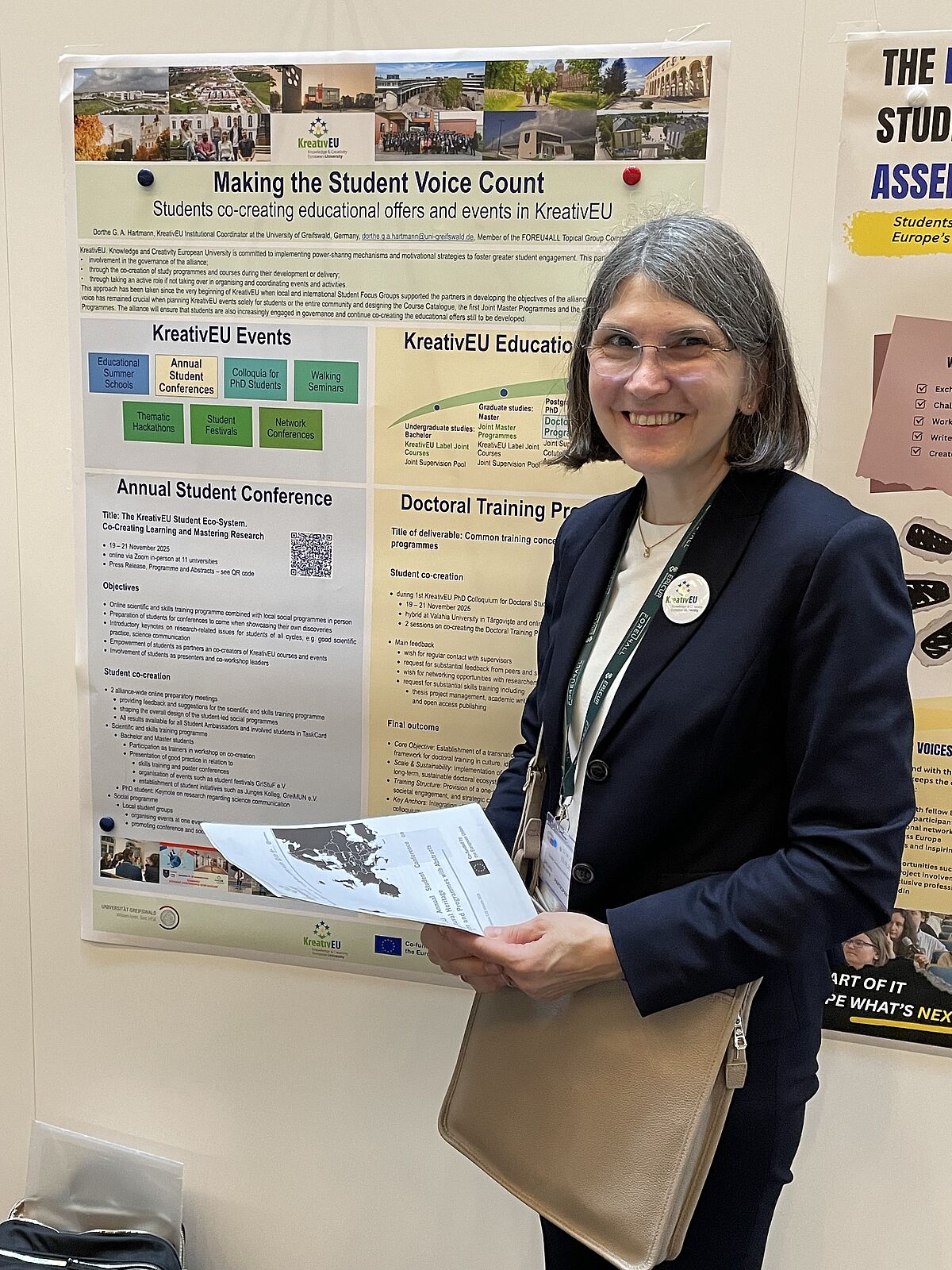
These insights culminated in twelve actionable prototypes, including community toolkits such as an art competition on "Home Away from Home," a Joint Researcher Database, and cultural initiatives such as "Festivalliance." Insights into good practices of student and staff engagement could also be drawn from the poster sessions, during which also KreativEU presented their student-centred approach with “Making the Student Voice Count. Students co-creating educational offers and events.”
Conclusion
The success of EUAs depends especially on the emotional and professional integration of their members. By focusing on formal recognition, targeted communication, and a shared purpose, EUAs can evolve from a collection of campuses into a unified European community.