
Famous Citizens
Caspar David Friedrich
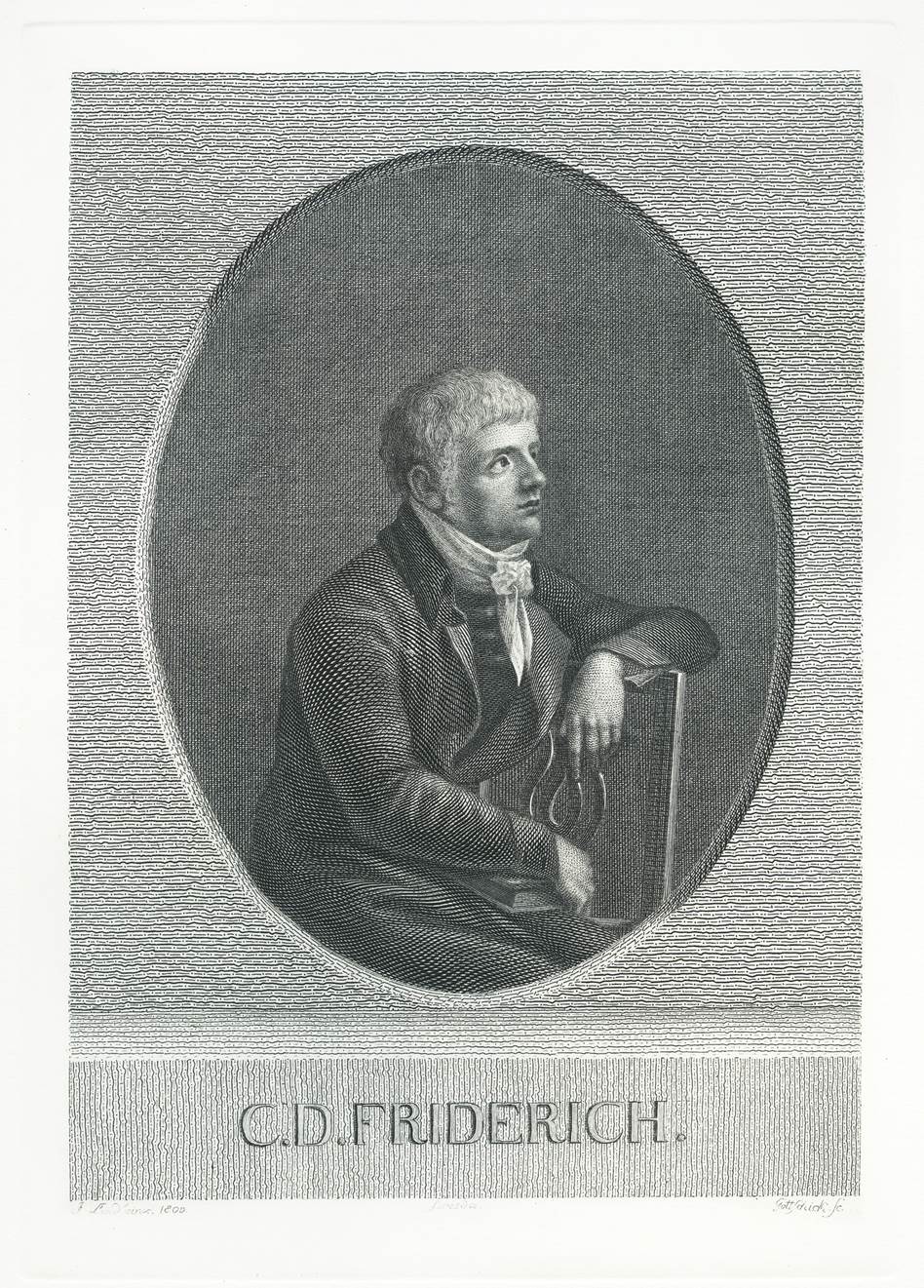
Caspar David Friedrich, the world-famous Romantic painter, is probably the most prominent public figure from Greifswald. He was born in Greifswald on 5 September 1774 and received his first drawing lessons there at the age of 14. His studies took him to Copenhagen and Dresden. During his many travels, he frequently returned to his home town, to which he remained attached throughout his life. Many of his popular motifs are set in Greifswald, particularly the abbey ruins in Eldena. His famous paintings also feature the marketplace, the Danish Wiek, the town silhouette with its three churches, and the meadows around Greifswald. On the Caspar David Friedrich Trail, you can follow in his footsteps and view some of his works at the Pomeranian State Museum.
Image credits: Portrait of Caspar David Friedrich, 1800, based on a painting by Johan Ludvig Lund,
engraved by Johann Christian Gottschick, copper-plate engraving.
New edition from 2014, archive of the Caspar David Friedrich Society, Greifswald.
Friedrich Loeffler

Although Friedrich Loeffler (1852–1915) was not born in Greifswald, he achieved great scientific success here. The renowned hygienist and bacteriologist was appointed Professor of Hygiene at the University of Greifswald in 1887. Together with Paul Frosch, he was the first to identify animal viruses – the pathogens responsible for foot-and-mouth disease – which were smaller than bacteria and lay beyond the resolution limit of the optical microscopes available at that time. Friedrich Loeffler is thus regarded as a co-founder of virology.
In 1910, he founded the world’s first virology research institute on the island of Riems, around 17 kilometres north-west of Greifswald. Research into animal health is still carried out to this day at the Friedrich-Loeffler-Institut – named after him since 1952.
In addition, Loeffler worked as a municipal health officer in Greifswald and took up the fight against epidemics and infectious diseases by building a modern sewage system.
Greifswald’s One Health research focus conducts interdisciplinary research into the interrelationships between human, animal, plant and environmental health – a connection that Friedrich Loeffler recognised early on.
Hans Fallada
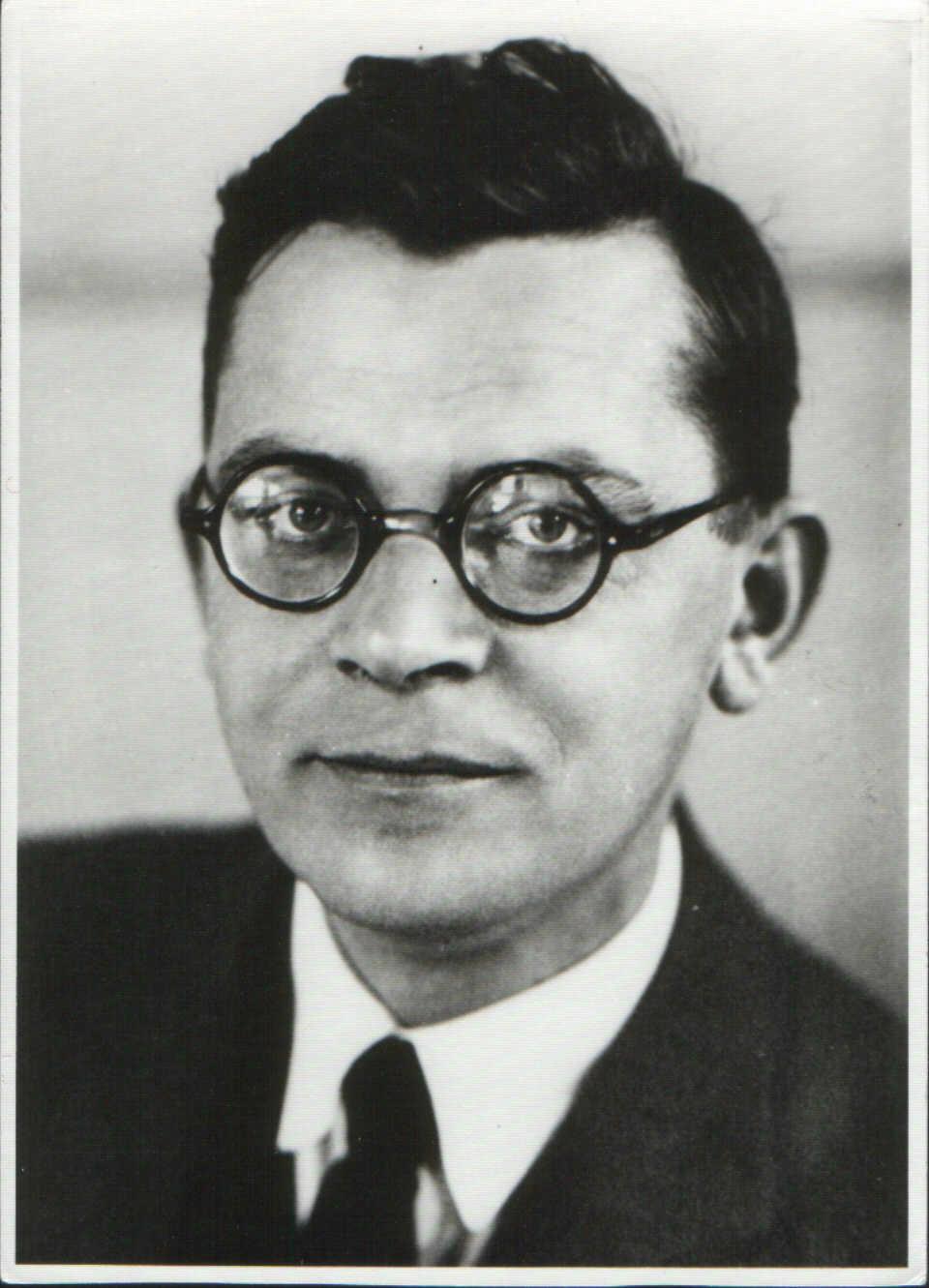
Rudolf Wilhelm Friedrich Ditzen, who wrote numerous literary works under the pseudonym Hans Fallada from the 1930s onwards, was born in Greifswald on 21 July 1893. Fallada rose to prominence as the star of New Objectivity with “Little Man, What Now?” (1932), which captures everyday life in the Weimar Republic and became a bestseller shortly after its publication. Other notable works include “Once a Jailbird” and the posthumously published “Every Man Dies Alone” (1947). Greifswald honors the author with guided tours, readings and the vibrant Falladahaus, which keeps his connection to the Hanseatic town alive.
Prof. Dr. Gerhard Domagk
“Without Domagk, there would be no sulphonamides; without sulphonamides, there would be no penicillin; without penicillin, there would be no antibiotics.” Sir Alexander Fleming
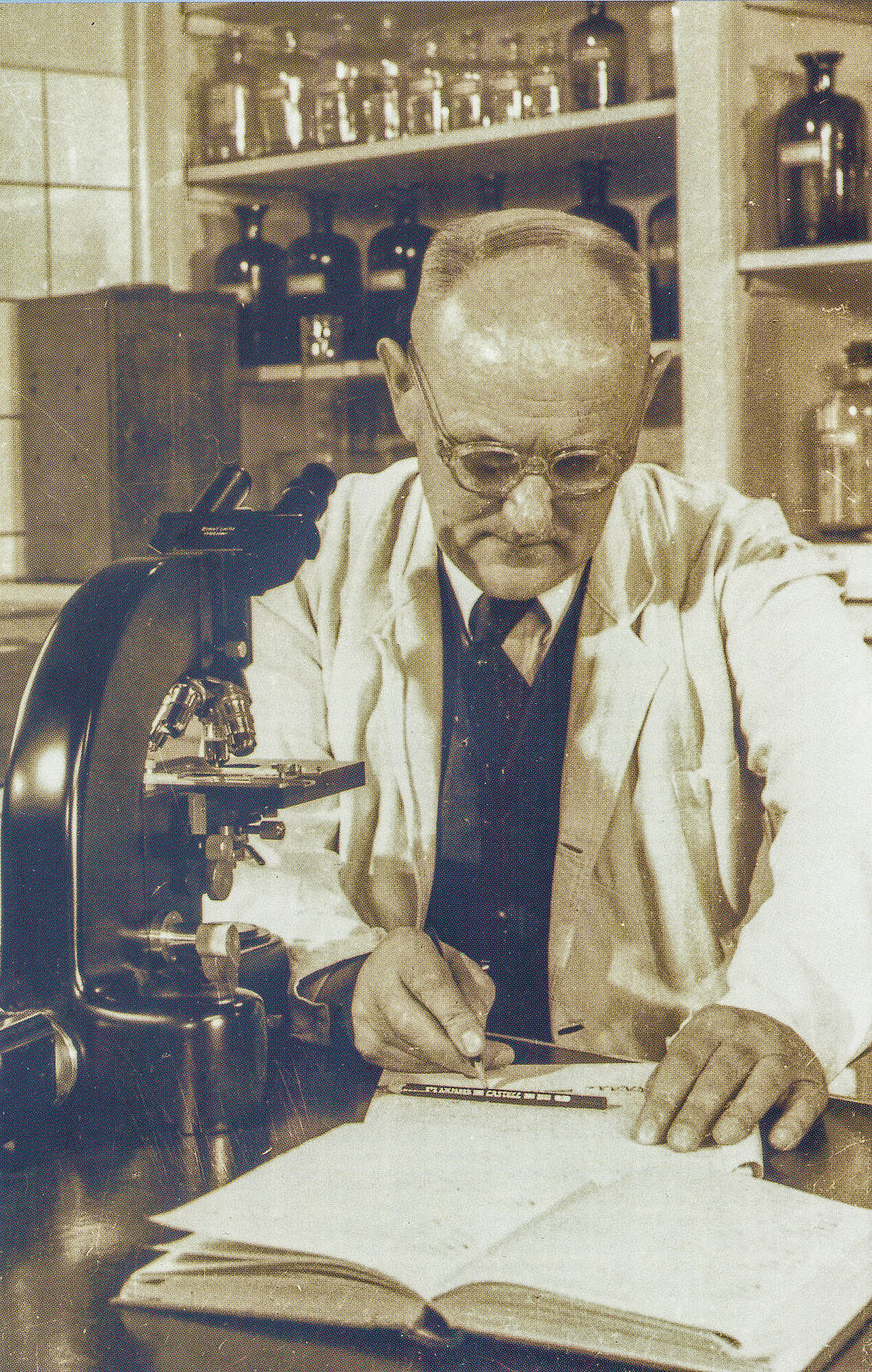
Prof. Dr. Gerhard Domagk (1895–1964) laid the foundations for his groundbreaking research into the chemotherapeutic treatment of bacterial infections as an assistant and postdoctoral researcher at the University of Greifswald’s Institute of Pathology (where he completed his habilitation in 1924). Here, he studied how illnesses develop in the body and how the body fights off diseased cells. He joined a research group at IG Farben in Wuppertal in 1927, where his work with the chemists Fritz Mietzsch and Josef Klarer led to the discovery of sulphonamides – the first effective chemotherapeutic agents and a crucial step towards modern antibiotic therapy.
Domagk received the Nobel Prize in Medicine for these achievements in 1939. The Nazi regime forbade him from accepting the prize, which is why he was only able to receive it in person eight years later. His early research in Greifswald set the course for his world-changing discoveries.
University Medicine has been granting the Gerhard Domagk Scholarship to outstanding early-career researchers in the field of medicine since 2008.
You can find out more about Prof. Dr. Domagk’s research in this ARD report [de].
Wolfgang Koeppen
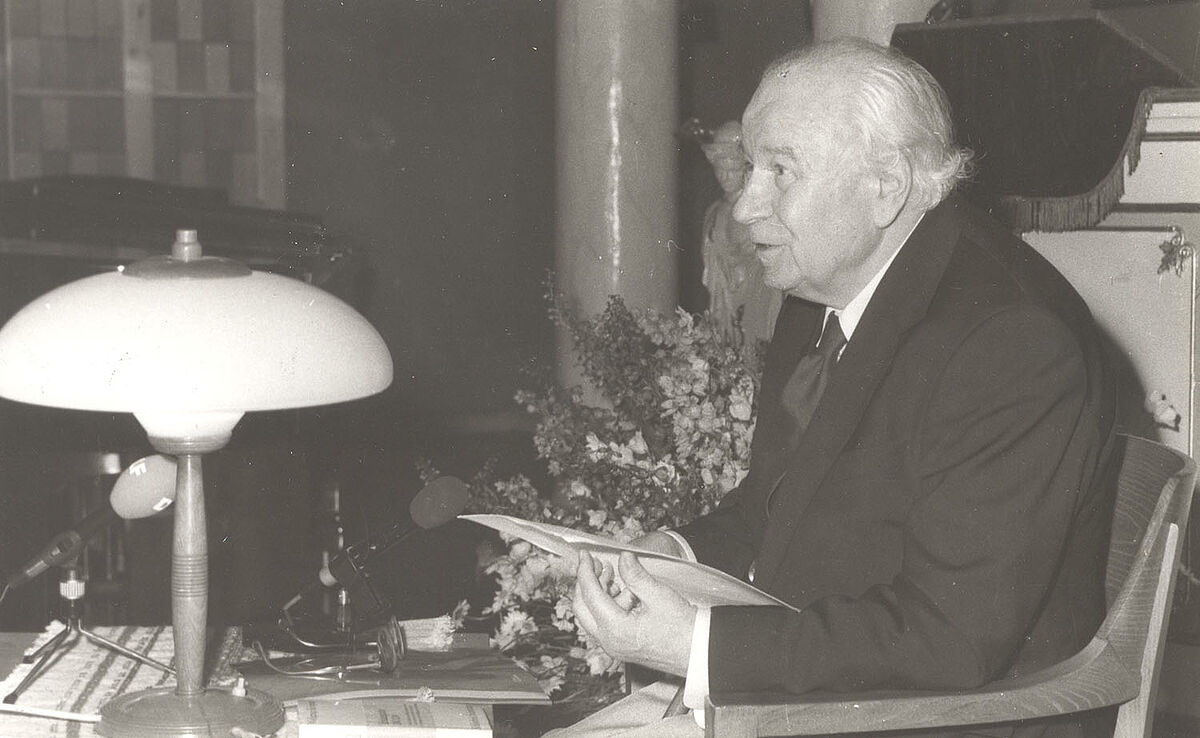
Wolfgang Koeppen was born in Greifswald on 23 June 1906. In his youth, he volunteered at the town theatre and attended lectures in German language and literature at the University of Greifswald, even though he was not enrolled as a student. He became known as a writer for his Trilogy of Failure, which comprises the three major novels “Pigeons on the Grass”, “The Hothouse” and “Death in Rome”. In 1990, Wolfgang Koeppen received an honorary doctorate from the University of Greifswald. Following his death in Munich in 1996, his entire estate went to the University of Greifswald. It is preserved and maintained here at the Wolfgang Koeppen Archive and also forms part of research into literary studies in Greifswald.
Berthold Beitz

Berthold Beitz (1913–2013) was born in Zemmin, near Greifswald, and became widely known as a manager and prominent industrialist in the mining industry of the Ruhr area. In 1952, Alfried Krupp von Bohlen und Halbach appointed him Chairman of the Krupp steel corporation. Shortly before Krupp’s death in 1967, Beitz persuaded his son to renounce his billions in inheritance, so that the private fortune could be transferred to a charitable foundation dedicated to promoting science, education and culture.
Although Beitz had “only” gone to school in Greifswald and had never studied or worked there, he is among the most influential supporters of the university town. He supported the renovation of the St. Nikolai Cathedral, the establishment of the Krupp Wissenschaftskolleg (Institute of Advanced Studies), the Caspar David Friedrich Centre, and various cultural projects to name just a few examples.
He was particularly committed to University Medicine [de] Greifswald. He funded the construction of a clinic for haematology and oncology, the “Community Medicine” scholarship programme, and the establishment of a hospice and a neurological rehabilitation centre.
In recognition of his commitment, Beitz was awarded an honorary doctorate in medicine in 1983, the title of Honorary Senator of the university in 1991, and honorary citizenship of the town of Greifswald in 1995. Following the completion of the Central University Library in 2001, Berthold-Beitz-Platz was officially opened in 2003 and has since been crossed daily by numerous students on their way to the Central University Library, the cafeteria and University Medicine.
Sibylla Schwarz

The Baroque poet Sibylla Schwarz was born in Greifswald on 14 February 1621 and was the daughter of Christian Schwarz, who was mayor at that time. She began writing poetry at the age of ten, which is evidence of the exceptional education she received for a girl of that time. From 1627 onwards, the effects of the Thirty Years' War could also be felt in Greifswald. War and death are central themes in her poems, as are friendship and love. When she was 17, Sibylla Schwarz suddenly contracted dysentery and died shortly thereafter. The family’s former home still stands today at Domstraße 12 in Greifswald.
Heinrich Rubenow

Heinrich Rubenow (c. 1400–1462), a lawyer and mayor of the town of Greifswald, used his political influence and part of his personal fortune in the mid-15th century to found his own university: the University of Greifswald. Thanks to his initiative, the necessary approvals were obtained from Wartislaw IX, Duke of Pomerania, and from the Pope, enabling the University to be formally founded in 1456. Rubenow was not only the first Rector, but also played a key role in the early development of the Faculty of Law in particular, where he was one of the first professors and to which he entrusted his private library.
The Rubenowplatz [de], along with the Rubenow Memorial in front of the Main University Building, still serves as a reminder of his role in founding one of the oldest universities in Northern Europe, which established Greifswald as a centre of education and research and continues to attract thousands of students to this day.