
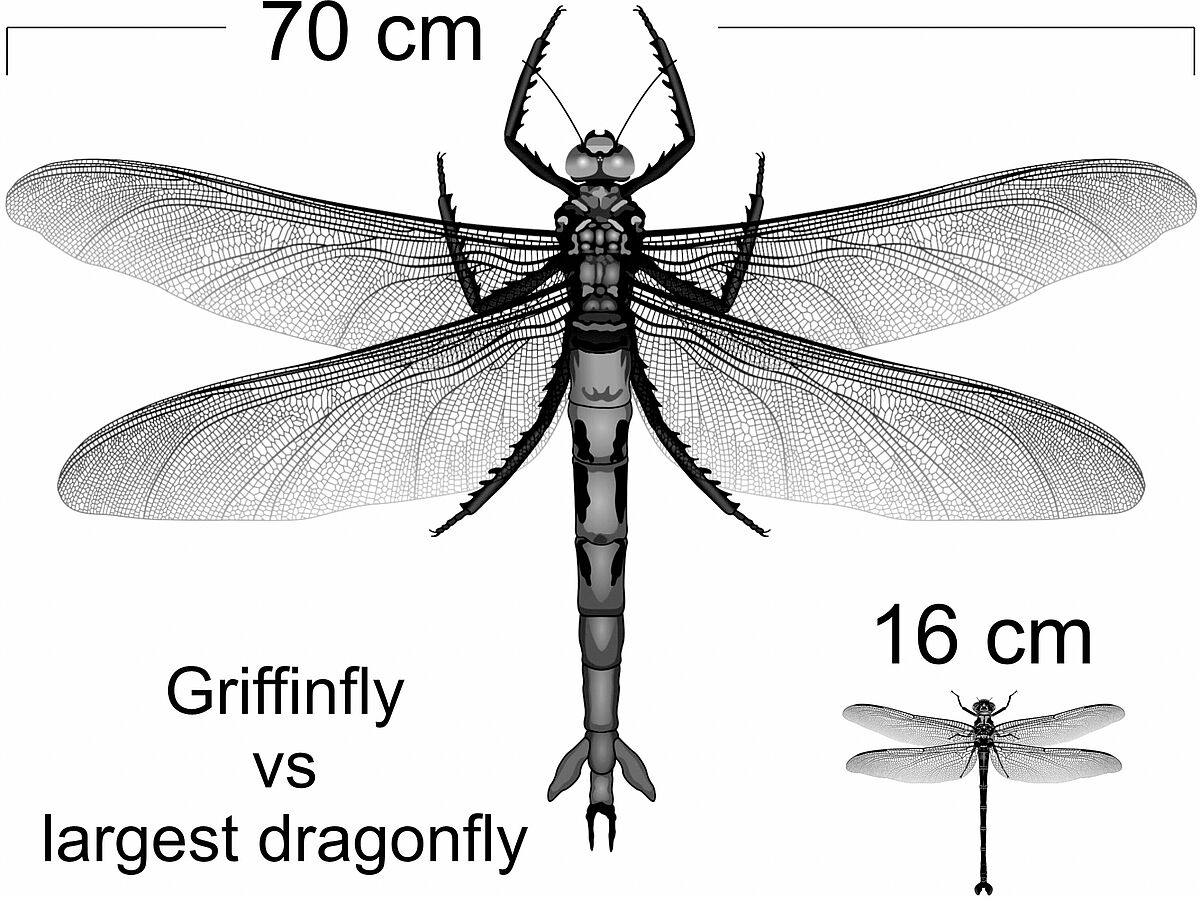
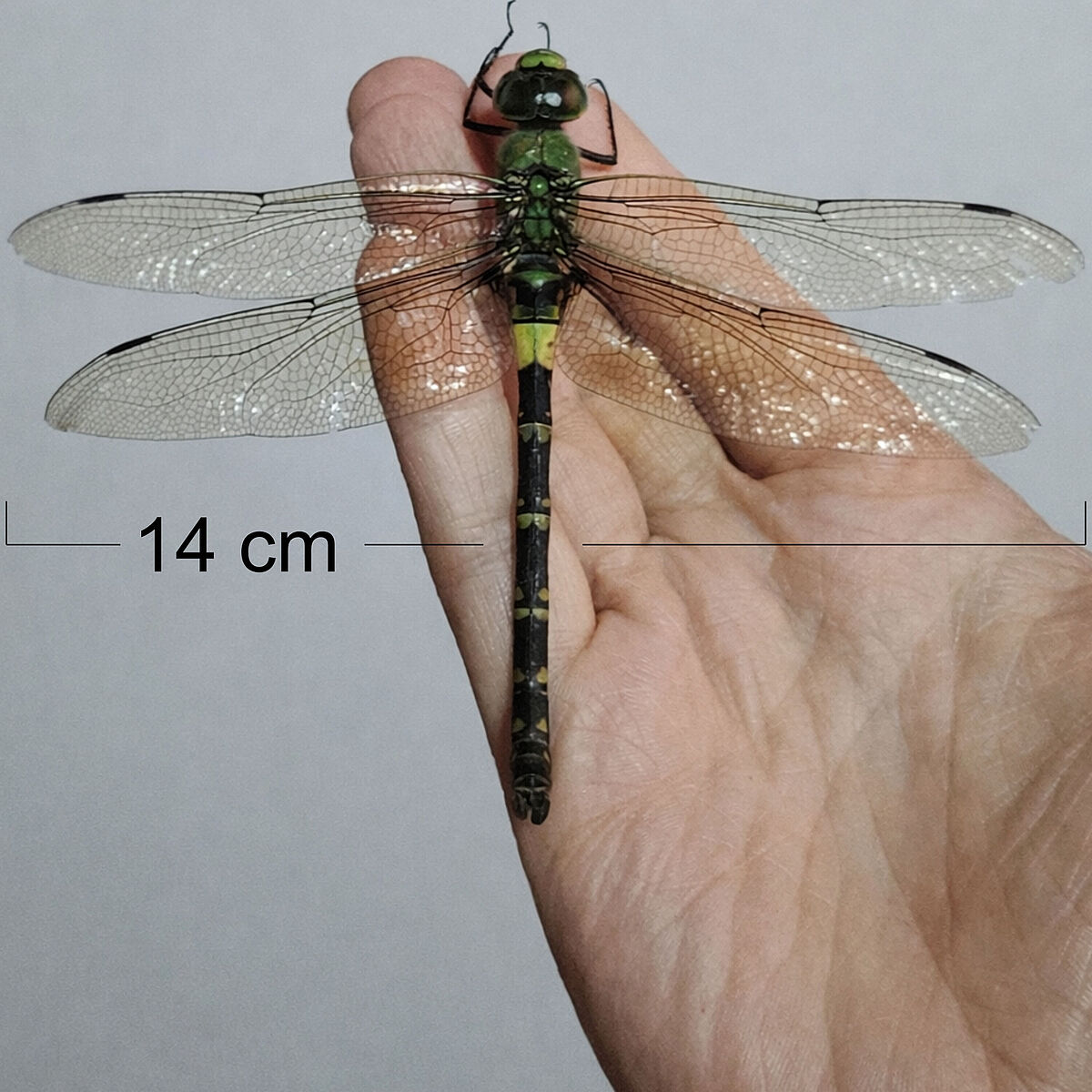
The Earth looked very different when giant insects such as the Meganisoptera were alive: vast coal-swamp forests expanded across the equatorial regions of the supercontinent Pangaea and the atmosphere’s high concentration of oxygen fed frequent wildfires. The waters were teeming with fish, whilst amphibians and crawling arthropods dominated the land. Giant flying insects ruled the skies above these habitats – from mayfly-like species with wingspans of up to 45 centimetres to the massive Meganisoptera, the so-called ‘griffinflies’ with wingspans of up to 70 centimetres. Fossilised impressions of these giants were discovered almost a century ago in Kansas.
The investigation led by Dr. Antoinette Lensink and Dr. Chris Weldon from the University of Pretoria, and Dr. Roger Seymour from Adelaide University challenges a widespread theory set in the 1960s that suggests that the presence of giganict insects was only possible due to the atmosphere’s 45 % higher level of oxygen at that time. Prof. Dr. Philipp Lehmann, a comparative physiologist from the University of Greifswald’s Zoological Institute and Museum, made a significant contribution to the analysis of the insects’ flight muscles. The article was published recently in the journal Nature.
New data challenges assumptions
Since the 1960s, academics have assumed that such sizes would be impossible today. This theory was based on insects’ tracheal system: oxygen reaches the flight muscles via diffusion through an intricate network of tubes. It therefore seemed that larger bodies and higher energy requirements were only possible due to a considerably higher level of oxygen.
Geochemical methods developed in the 1980s consolidated this theory: the reconstruction of the gas composition in the prehistoric atmosphere showed a much higher concentration of oxygen 300 million years ago – that corresponded to the fossils of giant insects. This was long considered a plausible explanation.
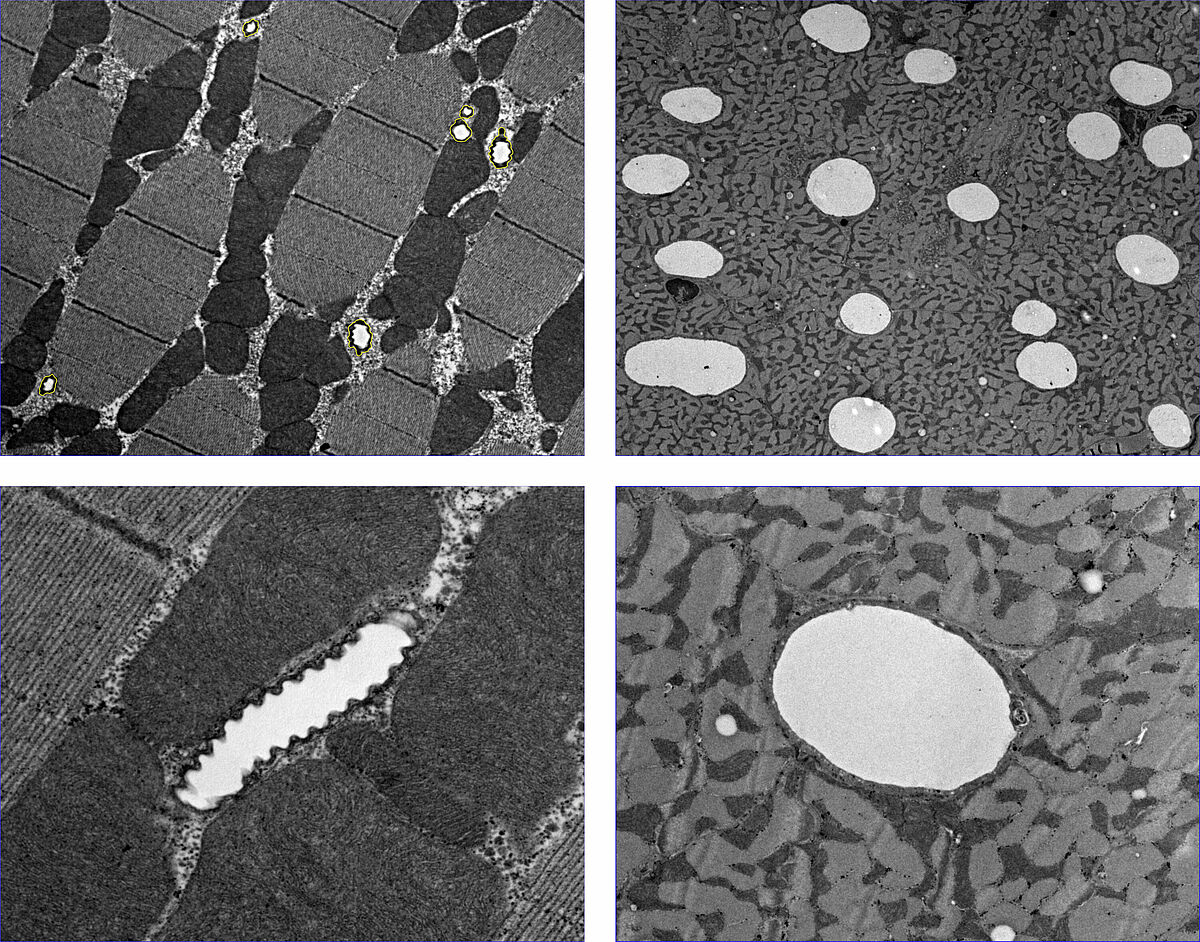
However, the new study shows that insects are able to regulate their oxygen requirements flexibly via their tracheal system. With the help of high-power electron microscopy, the team analysed how tracheoles – the tiniest branches of the tracheal system – supply the flight muscles in various insect species. The result: tracheoles only take up approximately one percent or less of the muscle volume – even in the gigantic fossilised species. This suggests that insects would be able to supply a sufficient amount of oxygen to their flight muscles irrespective of the proportion of oxygen in the atmosphere, by adjusting the number of tracheoles.
Dr. Edward Snelling from the University of Pretoria and lead author of the study, stresses: “if atmospheric oxygen really sets a limit on the maximum body size of insects, then there ought to be evidence of compensation at the level of the tracheoles.” There is some compensation in larger insects, but this can be ignored on the whole.
His colleague Dr. Roger Seymour from Adelaide University adds: “capillaries in the cardiac muscle of birds and mammals occupy about ten-times the relative space than tracheoles occupy in the flight muscle of insects.” There must therefore be great evolutionary potential to increase the number of tracheoles if oxygen transport were limiting body size. Snelling states that even possible limitations to the flow of oxygen could be compensated by increasing tracheolar investment.
Fundamental research at the University of Greifswald
Greifswald’s Prof. Dr. Philipp Lehmann sorted the data according to the types of flight muscles and flight-physiological parameters. He was “surprised that the patterns persist in spite of such large phylogenetic and physiological differences,” and stresses that it “was very useful to gain fundamental biological findings that question long-standing assumptions about the body size of insects.”
Lehmann describes the publication of the results in Nature as an important milestone: “It is exciting to finally publish these findings that are the result of more than five years of work, in such a renowned journal like Nature.” He hopes to continue his work on similar issues as part of new projects in the years to come.
The researchers conclude that oxygen and its transport through the tracheal system obviously does not limit the body size of insects. However, this does not mean that insects could have reached the size of small airplanes. Other factors, such as predation through small vertebrates or mechanical limitations of the exoskeleton most probably defined the maximum size.
Further information
Snelling, E. P.; Lensink, A. V.; Clusella-Trullas, S.; Weldon, C.; Lehmann, P.; Terblanche, J. S.; Payne, N. L.; Harrison, J. F.; Hickey, A. J. R.; Donaldson, A.; Deschodt, C. M.; Seymour, R.: Oxygen supply through the tracheolar-muscle system does not constrain insect gigantism. Nature (2026). https://doi.org/10.1038/s41586-026-10291-3
The study was published in the scientific journal Nature.
Contact at the University of Greifswald
Prof. Dr. Philipp Lehmann
Zoological Institute and Museum
Felix-Hausdorff-Straße 1, 17489 Greifswald
Tel.: +49 3834 420 4290
philipp.lehmannuni-greifswaldde