

Objectives
With the Käthe Kluth Junior Research Group, the University of Greifswald offers highly qualified female early-career researchers in the postdoctoral phase the opportunity to further distinguish themselves by independently leading a group, increase the visibility of their research, and thereby strategically advance their academic careers.
The University of Greifswald will provide the successful applicant with funds to cover a position for a member of academic staff (0.65 TV-L E13) and student assistants (82 hours/month) for the period of three years, and up to € 15,000 of material resources per year. You will also be admitted to the University of Greifswald’s Leadership Program.
You have the opportunity to realise an independent research programme, which may also serve as the basis for a habilitation or equivalent achievement. The group enables you to increase your publication performance in terms of quality and quantity and apply for high-profile project funding during the funding period. Furthermore, the position for the member of academic staff opens up the opportunity for a doctoral candidate to produce a thesis in close cooperation with you as head of the junior research group. At the same time, you gain leadership experience and expand your own research work.
The funding period is three years.
Female researchers from all disciplines who are in the early stages of their postdoctoral careers or hold a junior professorship, who
- completed a doctorate no longer than three years ago (cut-off date is the last day of the application window: 31 August 2026). This period is extended by two years for every child of an applicant,1
- hold a budgeted or project-financed position at the University of Greifswald (on a permanent or limited-term contract) with a prospective contract duration of at least three years,2
- have completed an excellent doctorate and produced further academic achievements.
1Delays in academic careers due to caring for relatives or long-term illness will be considered individually. 2It is not legally possible to combine the DFG-funded “Eigene Stelle” [Temporary Positions for Principal Investigators] with the Käthe Kluth Junior Research Group.
The application process consists of two stages. In their written application, candidates describe their proposed project and their academic achievements to date. If their application passes this initial screening, they will have the opportunity to present themselves and their project in person to the Senate’s Research and Structural Committee (scheduled for November 11, 2026).
The Käthe Kluth Junior Research Group announces new funding rounds approximately every 18 months; the most recent award was made in the spring of 2025. The current call for applications is for funding beginning in January 2027.
When preparing your resume, please follow the DFG's guidelines: DFG - Curriculum Vitae
Coordinator
Dr.in Jenny Linek
Domstraße 11, Entrance 4
Room 2.17
17489 Greifswald
Telephone +49 3834 420 1108
gleichstellungsbeauftragteuni-greifswaldde
Current junior research group leaders
Between Production and Reception
Textual-Historical Insights into the Period of the Second Temple in Jerusalem
| 2025 | Dr. Amrei Koch | Chair of Old Testament | Faculty of Theology |
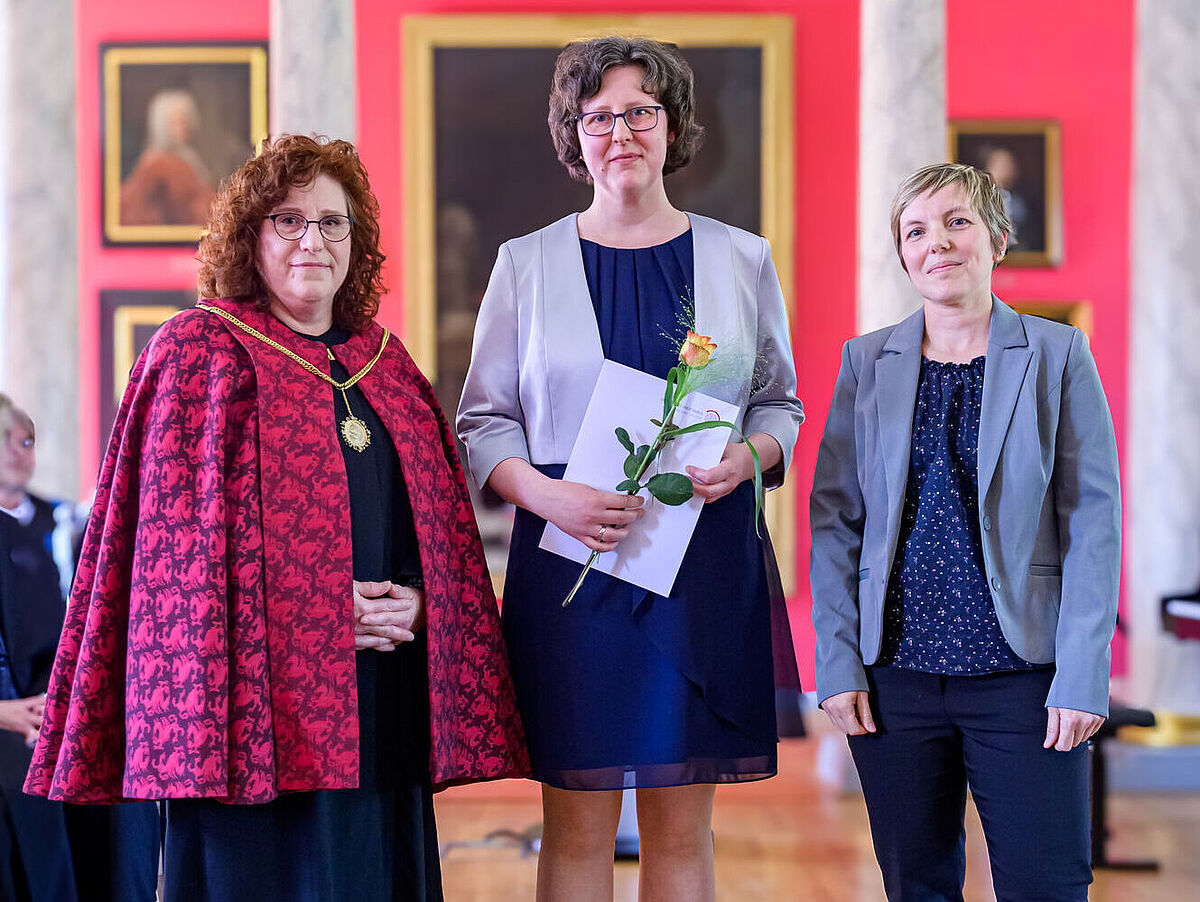
Dr. Amrei Koch’s junior research group is dedicated to examining biblical texts in their productive and receptive traditions, as well as in their literary context, during the period of the Second Temple in Jerusalem. The focus of this research is the text fragment 4Q372 1, which was discovered in Cave 4 at Qumran and tells the story of how Joseph fell into the hands of strangers. The nature of this text has been a subject of debate in scholarship, as has its historical context. The project therefore aims to more precisely determine the text’s position within the sociologically and religiously diverse Jewish community of the Second Temple period. This is to be achieved through linguistic, literary, and historical-tradition analyses that shed light on the text’s context of reading and interpretation, thereby leading to a determination of its unique character. No such comprehensive study has been conducted to date. By situating the project at the intersection of text production and reception, the junior research group also expects to gain new insights into the methodological challenges facing Old Testament scholarship.
Structures of Givenness
Phenomenological Approaches to the Entanglements of Object, Nature and Human Being
| 2024 | Dr. Giovanna Caruso | Department of Philosophy | Faculty of Arts and Humanities |
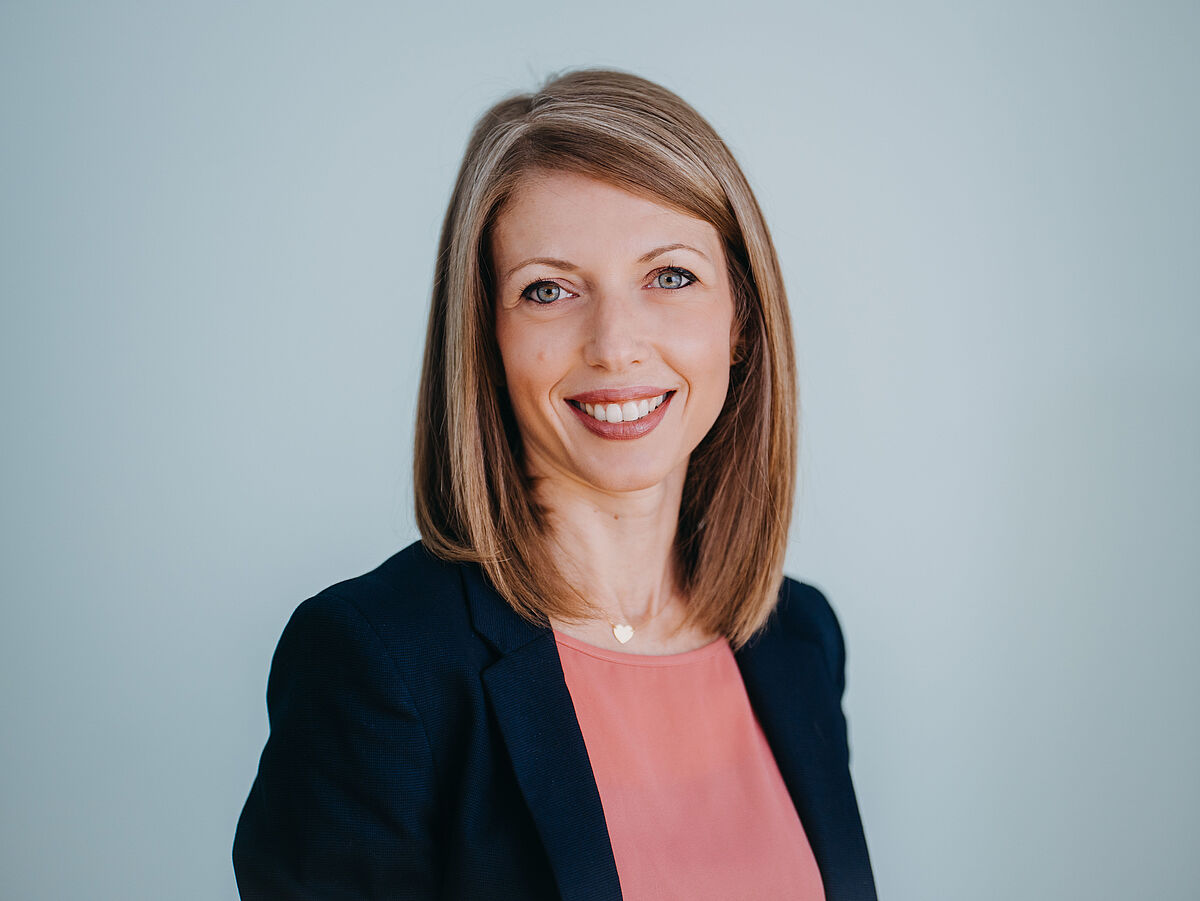
Everyday human life is shaped by things, technologies, and natural objects that enable or limit actions or raise ethical questions—reality thus presents itself as a complex interweaving of the human and the non-human. To explore and understand this increasingly complex reality, Dr. Giovanna Caruso’s research group adopts a phenomenological approach. The philosophy of phenomenology starts from the given nature of experience and seeks to articulate its transcendental structures. This enables the conception of human beings in their multidimensional place in the world—between objects and other living beings—while simultaneously analyzing the multifaceted reality that is sometimes inaccessible through either current subject-centered approaches (speculative realism) or dualistic modes of thought (posthumanism). In this way, new theoretical and practical perspectives on future-oriented issues in fields such as ecology, gender studies, and digitalization open up. Learn more
Former award winners
- 2024: PD. Dr. med. habil. Marie-Luise Kromrey Senior Physician and board-certified radiologist at the University Hospital Carl Gustav Carus Dresden [de]
- 2020: JProf. Dr. Paula Prenzel, Geography and Geology Greifswald
- 2019: Dr. Rieke Trimcev, Political Science University of Erlangen–Nuremberg
- 2017: Dr. Susanne Sievers, senior scientist, group leader and interim professor to cover Katharina Riedel at the Chair of Microbial Physiology and Molecular Biology, Microbiology Greifswald
- 2015: Dr. rer. nat. Antje Vogelgesang, University Medicine Greifswald [de]
- 2014: Prof. Dr. Christiane Pané-Farré, since May 2019 Professor of Clinical Psychology at the University of Marburg [de]
- 2013: Dr. Cristina de la Vega Leinert, Geography Greifswald [de]
- 2012: PD. Dr. Ekaterina Poljakova, Philosophy Greifswald [de]
- 2012: Prof. Dr. Klavdia Smola, since 2018 Professor of Slavic Literatures and Cultures at TU Dresden
- 2011: Dr. rer. med. Nele Friedrich, Biomathematics/University Medicine Greifswald [de]
- 2011: Prof. Dr. Kerstin Knopf, since 2015 Professor of Postcolonial Literary and Cultural Studies at the University of Bremen [de]
- 2011: PD Dr. med. habil. Pia Menges, medical expert in the field of medical law for the Bavarian Medical Service [de]
- 2010: PD Dr. Tanja Pfeiffer, Botany Greifswald
- 2010: Dr. Nicola Neumann, Psychology Göttingen [de]
- 2010: Prof. Chiara Piazzesi, since 2013 Professor of Sociology at the University of Québec [fr]
- 2008: Prof. Dr.rer. nat. habil. Haike Antelmann, since 2015 Professor of Microbiology at FU Berlin
- 2007: PD Dr. rer. nat. Heike Kahlert, Chemistry Greifswald
Käthe Kluth
Käthe Kluth (1899-1985) studied English, German and History in Stralsund and Rostock and obtained her PhD at the University of Greifswald in 1927. Between 1930 and 1946 she worked as a teacher at the secondary school in Pasewalk. During the following six years (1946-1952), Kluth worked as a lecturer and language teacher for English at the University of Greifswald, where she played a decisive role in the establishment of the Department of British and North American Studies. In 1952 she became the first female professor at the Alma Mater with a teaching contract for English Studies at the Faculty of Arts and Humanities. From 1956 onwards, she was head of the Department of English. Three years later, she was appointed a professorship with a full teaching contract. Prof. Dr. Käthe Kluth was appointed emeritus professor in 1962.