“We still have several exciting questions to answer”
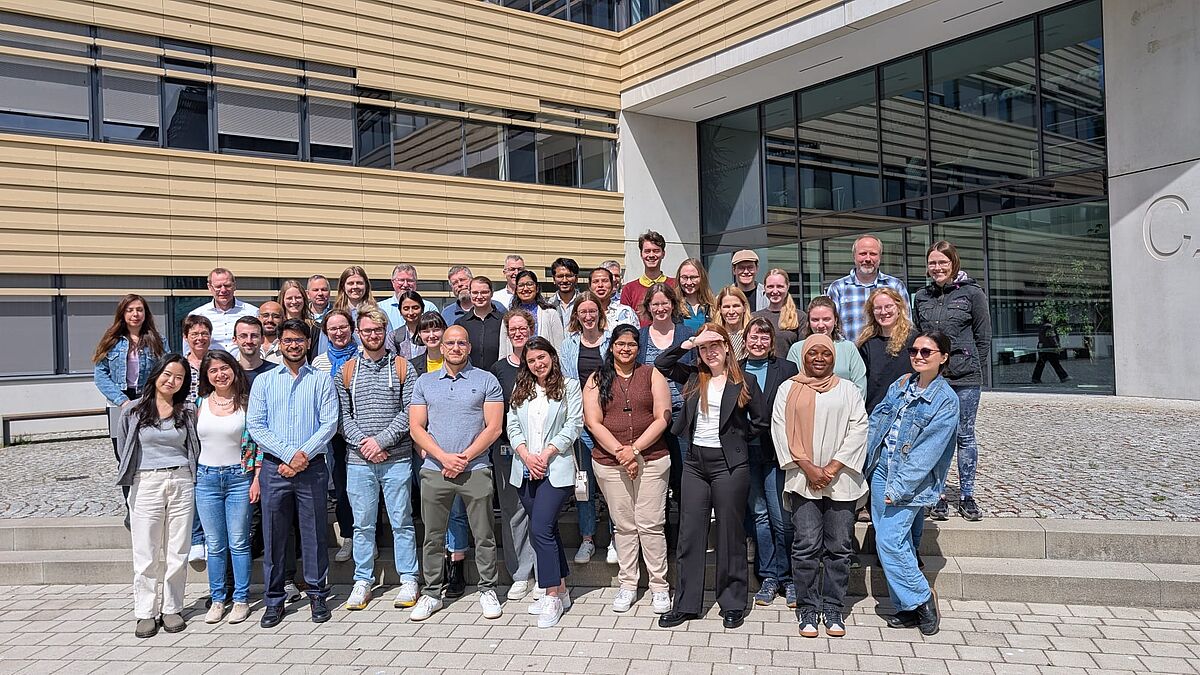
The Research Training Group is coordinated by the immunologist Prof. Dr. Barbara Bröker. She says: “I am thrilled that the huge commitment and excellent collaboration between early-career and experienced researchers in PRO were honoured by the DFG. We still have several exciting questions to answer and can now continue all of the projects.” The Greifswald Research Training Group PRO managed to withstand competition from all over Germany. “This success is the result of the Greifswald spirit that features trusting cross-disciplinary and cross-faculty collaboration. This is how modern research should work!” agree Prof. Dr. Karlhans Endlich and Prof. Dr. Mathias Eschrig, Deans of the Faculties of Medicine, and Mathematics and Natural Sciences.
Research on proteases – a clinically significant field
The Research Training Group’s activities centre around proteases, i.e. enzymes that break down proteins and thus perform a key role in cellular processes and in the interaction between pathogens and their hosts. The researchers aim to elucidate the importance of these enzymes during infection or inflammation.
A key area of the Group’s research investigates pathogens with high global relevance, which are included on the WHO Bacterial Priority Pathogen List such as staphlyococcus, streptococcus and tuberculosis pathogens (Staphylococcus aureus, Streptococcus pneumoniae und Mycobacterium tuberculosis). Further fields of research approach sterile inflammations such as pancreatitis, allergies, and autoinflammatory illnesses.
This entails investigating various protease systems from different angles. These range from basic mechanisms of cell homeostasis, the equilibrium within a cell, to the question as to how immune defence and immune evasion compete with each other in the infection process. As proteases can be influenced by natural or synthetic inhibitors, the field of research also has potential therapeutic significance.
Cutting-edge methods – outstanding training
The Research Training Group connects fundamental research with clinical research in an interdisciplinary context. This fosters synergy effects that improve our understanding of the mechanisms of how proteases influence the cellular and functional networks. Greifswald is home to high-end infrastructures on an international scale, including platforms for extensive Omics analyses that can be used to measure and evaluate a number of factors at the same time. The doctoral candidates work at the interface between the Faculty of Mathematics and Natural Sciences and the Faculty of Medicine – an environment that, according to the project description, provides “the best conditions for an attractive, challenging career in science or industry”. In the interest of the best possible training of the doctoral candidates, the Research Training Group PRO always provides a sufficient balance between thematic focus and the required breadth of topics.
Further information
Research Training Groups are comprised of doctoral candidates and researchers, who collaborate on a joint and often interdisciplinary topic. The close exchange between doctoral candidates and researchers make it possible, on the one hand, to complete a doctorate quickly and, on the other, promotes subject-specific and interdisciplinary continuing professional development. The DFG currently funds 209 Research Training Groups, including 29 International Research Training Groups (IRTG). Eleven more will now be added. UMG and UG’s Research Training Group PRO is one of ten RTGs whose funding period was extended.
Contact at University Medicine Greifswald
Press Office
Tel.: +49 3834 86 5288
kommunikationmed.uni-greifswaldde
Contact at the University of Greifswald
University Communications
Domstraße 11, Entrance 2, 17489 Greifswald
Tel: +49 3834 420 1150
pressestelleuni-greifswaldde