
Roles and Responsibilities
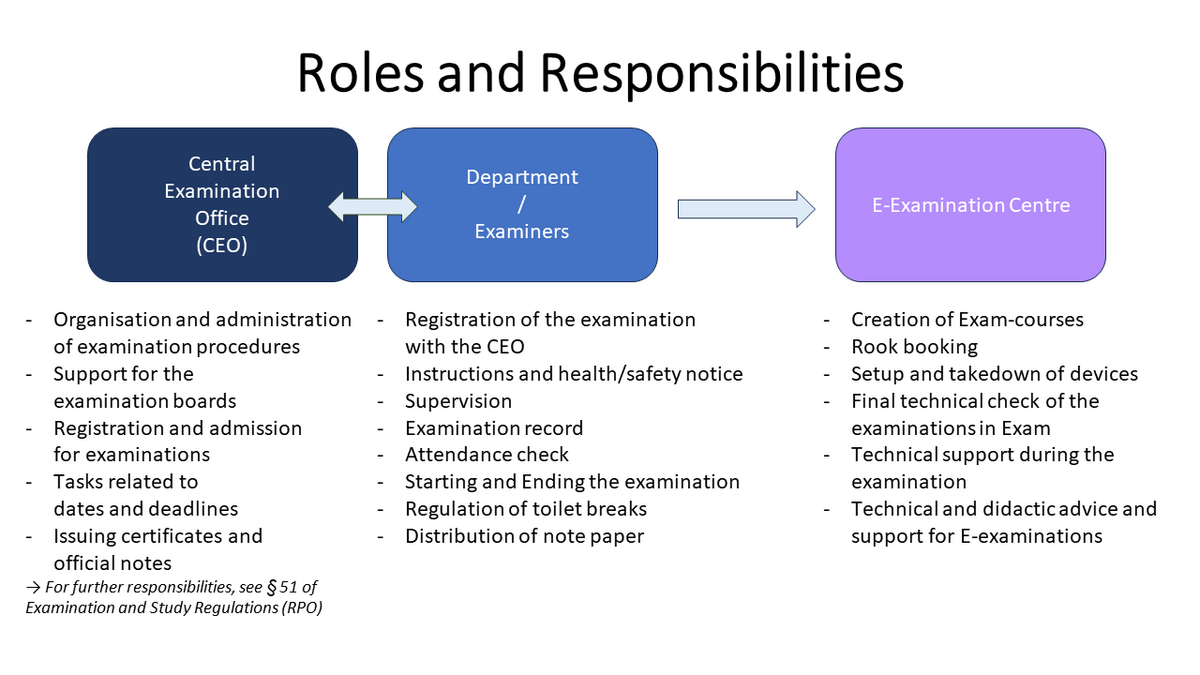
The Central Examination Office, the E-Examination Centre, and the examiners are all involved in conducting e-examinations. Each of these parties has clearly defined tasks and responsibilities.
The Central Examination Office (CEO) is responsible for organising and administering examination procedures and has the right to receive information on all examination-related matters. A complete list of the responsibilities of the CEO can be found in § 51 of the Examination and Study Regulation.
The examiners and the respective departments are responsible for conducting the examination. Their responsibilities include supervision, attendance checks, keeping the examination record, and making decisions during the examination.
The E-Examination Centre provides technical and didactic support for E-examinations. This includes setting up examination courses on Exam, providing the necessary devices, and offering technical support during the examination.
Please note:
The E-Examination Centre is not the Central Examination Office and does not make decisions concerning examination regulations, such as decisions on admission to examinations, withdrawal from examinations, or notifications of illness.
The following overview shows the respective responsibilities of the parties involved.
What to do in the event of an alarm
In the event of any alarm, the e-examination must be interrupted immediately and the building must be evacuated – regardless of whether it is a drill, a false alarm, or an actual emergency.
The safety of everyone involved always takes priority over the planned examination procedure. Only after the building has been declared safe by the responsible authorities a decision can be made on how to proceed.