Sustainable Corporate Management
Duke Bogislaw XIV, Duke of Pomerania-Szczecin, bequeathed the District of Eldena to the University of Greifswald in 1634. As a result, the University still owns land in and around Greifswald to this day. Whilst the forest is managed by the university’s foresters, the agricultural land is leased to regional agricultural businesses. The Corporate Management Division is responsible for the administration and use of these properties. Its tasks include not only the management of the university’s own forest and wildlife management, but also the management of contracts with third parties. The Coporate Real Estate Department has set itself the goal of managing the university-owned property sustainably. The Department bases its activities on clear ecological, economic, and social criteria.
Forestry of the future
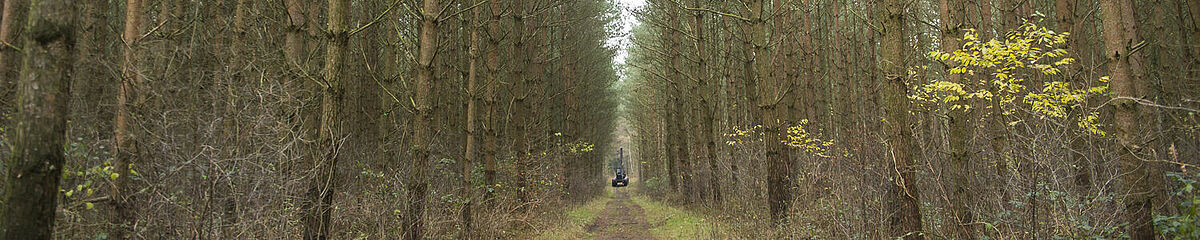
Around 36 per cent of the lands owned by the university is forest. As well as providing timber, forests fulfil a wide range of functions that are relevant to society, by sequestering carbon from the atmosphere and binding it for the long term, cooling the landscape, producing fresh air, significantly contributing to groundwater replenishment, providing a habitat for specialised flora and fauna, and contributing to physical and mental well-being. They serve as places for recreation, education and learning for all generations and as an important research subject for a wide range of disciplines.
The goal of forest management is to promote long-term, ecological forest development. Forest growth must be ensured for the long term in order to increase the potential for CO2 sequestration. Furthermore, forest management is based on the development and maintenance of the greatest possible diversity of species and structures for the respective location, as well as the permanent establishment of native herbs, shrubs and tree species when planting the edges of the forest. In addition, comprehensive preserving of old trees and biotopes, as well as avoiding the permanent drainage of wetlands – and thus protecting rare and endangered animal and plant species – are regarded key principles of forest management.
Protecting peatlands means protecting the climate
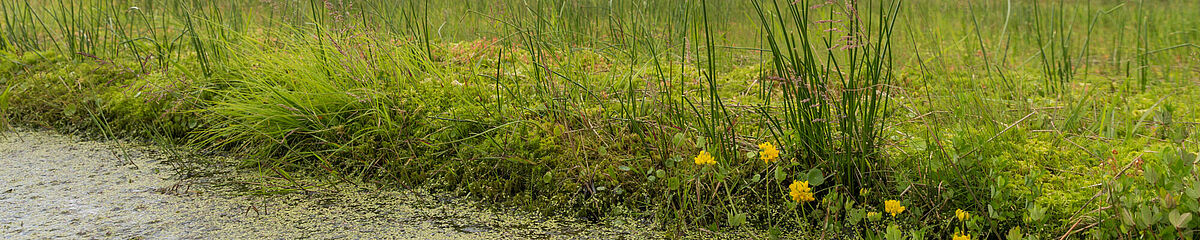
The peatlands surrounding the Hanseatic town of Greifswald were systematically drained over the last few centuries in order to gain new land for urban development and agriculture. As a result, some of the university’s premises actually lie on top of peatlands. The problem is that drained peatlands release a significant proportion of greenhouse gas emissions. To prevent this and to enable us to use our peatlands as greenhouse gas sinks in the future, they should be rewetted wherever possible in the long term.
On our way to more sustainability – farming on university land
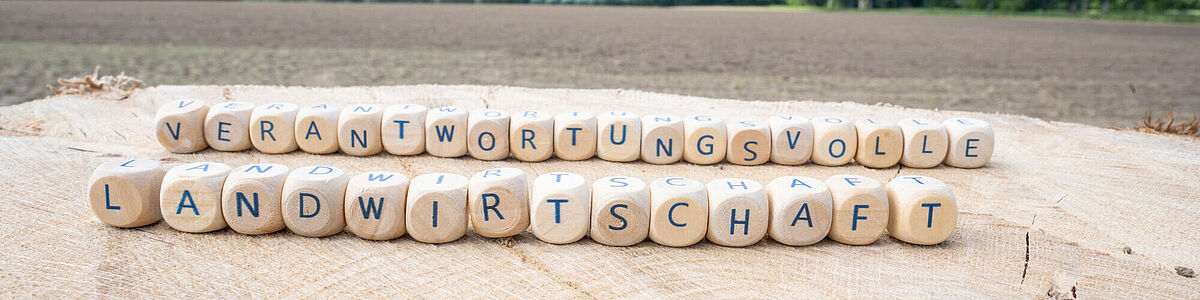
The majority of the land owned by the university is arable and primarily used for farming. A full 47 per cent is arable land. Of course, the University does not manage its agricultural land itself, but leases it to tenants in the region. Sustainable and ecological land management can therefore only be achieved through collaboration between the landowners and tenants. The University also shares responsibility for both the people and the environment as a member of the Greifswalder Agrarintivative e.V. [de]